I am indebted to Paige Rose PhD who contributed material for this
conversation.
You run a Silicon Valley start-up. Your IT department is slated to
expand. How will you fill new positions with qualified
people?
Easy. Create the list of skills required, post it to
a tech website,
then wait for the deluge of responses to pour in. It's been that way
since the start of the PC revolution and
the internet.
Even longer than that, it's been similar since the advent of
legacy mainframe
computers,
the difference being the skills required and the method of finding
them. If you were looking to fill positions with qualified
legacy mainframe
computer personnel,
you created a skill list which you gave to a tech search firm.
Now here's
a question.
Imagine
you could travel back in time to the days before
legacy mainframe
computers
(that is, before any computers actually) had became de rigueur.
If you were looking for qualified
people,
you couldn't simply go to
a tech website
(there weren't any) or have a tech search firm search for them because
nobody had those skills in those days. It was still much too early in
the piece in the advent of tech. So what could you do to find hirees?
It's the stuff of legend (the stuff of legend may not be
true,
and it may be) that companies who were looking for qualified
people
before the proliferation of
legacy mainframe
computer technology,
set up hiring tables in the lobbies of the San Francisco
jazz
clubs, their rationale being that the skillset that makes someone a
great
jazz
musician, the ability to improvise, is the same skillset that
makes someone a great computer programmer. So they pitched offers of
employment which included training, to eager, unemployed jazz
aficianados, hired them, and trained them to become
mainframe computer
programmers
way back when (even long before)
God
was
a boy,
when programming meant punching holes in cards and paper tape, long
before screens were invented.
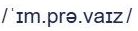
Definition
improvised
adjective
from the verb
improvise
to invent or make something, such as a speech or a device, at
the time when it is needed without already having planned it
<unquote>
To live an improvised life is to live a life full of
moment-to-moment
possibility, without already having planned things ahead of time. To be
sure, living a life successfully also requires prudent planning ahead.
So I've learned to be prudent. I've planned for all the important
eventualities that should be planned for. Planning ahead doesn't negate
ie isn't in opposition to living an improvised life ie living a life of
moment-to-moment
possibility. In point of fact it supports it. When all the paperwork,
the filings, the documentation, wills, legalese, durable power ofs etc
have been constructed and completed, I have almost limitless
unencumbered free time in the present, during which I'm harboring very
few concerns for the unpredictable, unaccounted for future. It's in
this open space that living an improvised life, an inspired life, a
life of possibility, a life lived fully, a life created
passionatelymoment-to-moment,
becomes readily available.
Oh, and I just
love the
analogy of playing
jazz,
for living an improvised life. The piano tinkles a riff which the
guitar picks up and amplifies, the saxophone emphasizes and humanizes
all of it while the bass, ever-present, throbs discontiguously. That's
so us, like a
jazz
quartet bringing forward what all previous improvisations of the piece
called us to bring forward, then to embrace them, coming from
possibility, stepping out into nothing, creating a totally new epic.
Werner's
work lays bare a rich body of distinctions which make living coming
from possibility rather than from inevitability available, thus making
living an improvised life
accessible.
Although he once told me singing is not something he's good at, I like
the
jazz
analogy of living an improvised life. It's a good fit.