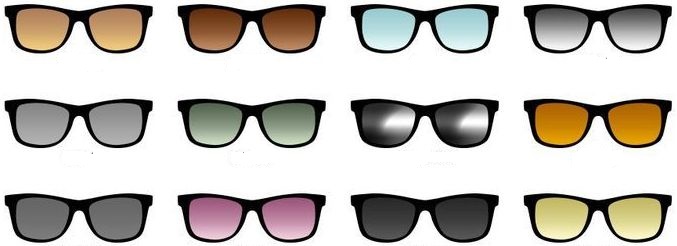
"My people
have been wearing green glasses on their eyes for so long that most of
them think this really is an Emerald City."
... L ("Lyman") Frank Baum embodying Oz, The Wonderful Wizard of
Oz
This essay,
Green Glasses,
is the companion piece to
Epistemology.
Tinted Lenses
Life demands a certain willingness from us to be
unflinchingly
truthful when we distinguish
the waypeopleoccur for us if we're ever going to lay claim to being
able to see
peoplethe way
they really are. For all intents and purposes,
every person
in my life including everyone I've ever met, and everyone I've yet to
meet, occurs for me as a function of
the way
I see them - which may not always be
the way
they really are. For all intents and purposes, there may be no easy
access
to seeing
peoplethe way
they really are. If I tell the truth about it, what I do have
access
to is seeing
peoplethe way
they occur for me. And the drift in life is for
the waypeople
occur for us, to obfuscate
the way
they really are. That is to say it's my tinted lenses which determine
your color.
It's pernicious - not to mention humbling when I
discover
that's what I'm thrown to do. It could be the
biggest
(and most costly) error one can make in life. And look: the error is
not in obfuscating how
people
really are, with how they occur for us. We do that automatically.
That's the milieu in which we live. It's the
human
condition. The
biggest
error is when I don't take responsibility for it, when I'm not being
responsible for my tinted lenses determining your color.
As I
sit
with this, digging deeper into whether or not we have the ability to
see
people
(indeed, all things in life)
the way
they really are, not merely
the way
they occur for us, I'm fast closing in on the likelihood that we have
little ability to see things as they really are. Given it's our
interpretive machinery ie given it's our
epistemology
that's on full automatic, we may have zero ability to see
people
and things
the way
they really are, and are only able to see everyone and everything
the way
they occur for us. If that's true, it may be a
death
knell for our arrogance which always assumes what we see is
the way
it really is.
As for
the origins
of this
state of affairs
(ie howthe way
things really are, became obfuscated by
the way
things occur for us), it's now plainly obvious with hindsight (and
hindsight is always 20/20 vision) that it's been this way
right from the get-go. It's what we've
begun
to accept after having engaged in the earliest
rigorous
inquiries as to whether or not it could be true. Then, after the
automaticity of our interpretive machinery and our
epistemology
were better understood, it
began
accepted that it may indeed the case. The worm had turned
inexorably
in that direction. Later we realized that it ... is ...
that ... way ie
the way
things really are, is obfuscated by
the way
things occur. And the thing is: now that we know it, there's no
other way it could possibly have been.
It takes something
big,
an act of great courage to entertain the likelihood that
anypoint of view
is just one of millions of possible
points of view.
It's the automaticity of our interpretive machinery and our
epistemology
that has a vested
interest
in ourpoint of view
being the right one,
the way
it is, and not
the way
it occurs uniquely and individually for every one of us. The absence of
such acts of courage, accounts for the combative state of
the world
today.
We
human beings
may never have the option of seeing things
the way
they really are. The closest we may get to it is distinguishing the
tinted lenses (our interpretive machinery and our
epistemology)
that we all wear, which decide the color of that at which we're
looking. If you wear green glasses,
the world
looks green. If you don't own it, if you aren't responsible for wearing
green glasses, then what's obvious is
"The world
is green.". For you, it's just that way.